


He said the initiative was historic, noting that the blue economy remains central to the development agenda of the government.
The special adviser said that improving safety across Lagos waterways is not optional but a critical responsibility.
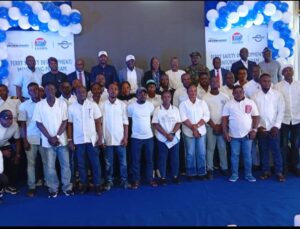
According to him, the programme will combine self-paced learning, virtual mentorship, and practical hands-on sessions, ensuring participants gain both theoretical knowledge and real-world experience.
Also speaking, the Chief Executive Officer of Interferry, Mr. Mike Corrigan, who spoke virtually said the initiative is part of a broader global effort to improve ferry safety in emerging economies while supporting sustainable economic growth.
Corrigan who and his colleagues joined virtually said that similar programmes had previously been implemented in Asia-Pacific countries such as the Philippines and Indonesia, before expanding to Africa in 2024 in response to growing safety concerns.
He recalled that a series of workshops held in cities like Dar es Salaam and Marrakesh laid the groundwork for the initiative, while a major regional safety conference hosted in Lagos in 2025 attracted about 250 industry stakeholders.
According to him, that conference ultimately led to the development of the current 18-month mentorship programme, which features structured training modules and ongoing support from Interferry experts and international volunteers.
He added that the organisation remains committed to long-term collaboration, with plans to extend the programme across Nigeria and other African countries to significantly improve safety standards for both passengers and crew.
Also speaking, Mrs. ShariCorrigan, Director of Conferences and Finance, INTERFERRY, assured that the trainees will be well train in the latest innovations in the marine industry and will be in a better positions after

She assured that LASFERRY would continue to ensure partnership with LASWA in the marine industry.
Abah emphasised that safety on the waterways is a collective responsibility, adding that efficient and reliable water transport is essential for unlocking the full potential of the blue economy.
Also speaking, Mr. Stanley Wali of the Nigerian Maritime Administration and Safety Agency (NIMASA) described the programme as timely, noting that it represents a bold step toward strengthening safety standards across Nigeria’s maritime industry.
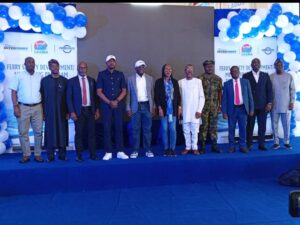
Wali reaffirmed NIMASA’s commitment to upholding international maritime conventions, stressing that increased knowledge sharing and collaboration among stakeholders would play a vital role in reducing accidents and improving overall safety on the waterways.
Comments
Post a Comment